Inspired to Transform Your Space?
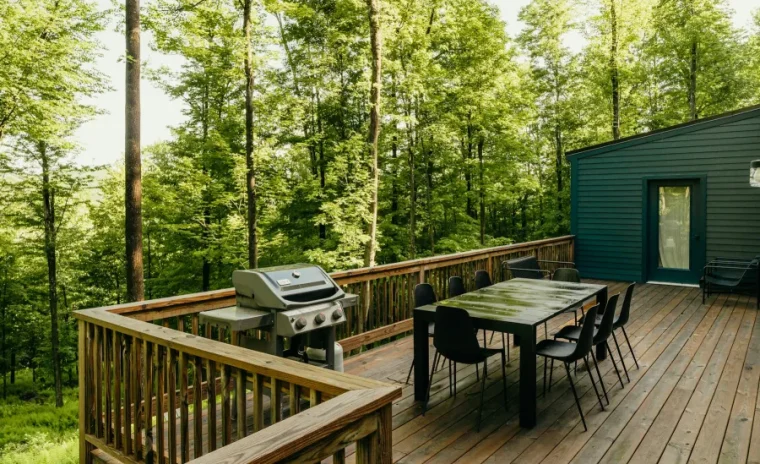
How Much Does a Deck Cost in Western Kentucky?
Most homeowners start in the same place. They have an idea of what they want. They start asking around. Then the numbers come back higher than expected, or two contractors are nowhere close to each other. That gets frustrating fast. Especially when you’re just trying to figure out whether a deck is even realistic for your budget.
This is meant to give you a straight starting point before you start making calls.
⸻
The Honest Answer Is: It Depends
That’s not a dodge. It’s just the truth.
A basic deck sitting low to the ground is one kind of project. An elevated deck with composite boards, wide stairs, and upgraded railing is a completely different one.
It may sound similar when you talk about it. It is not the same build.
What really changes the price is not just size. It’s the structure underneath it, the materials going on it, how high it sits, what kind of stairs or railing it needs, what the site is like, and what is actually included in the job.
That’s why the numbers can move around so much.
For planning purposes, though, here are realistic starting ranges for what decks in Western Kentucky often cost.
⸻
Realistic Price Ranges
Basic pressure-treated deck
Simple layout. Close to the ground. Standard railing where needed. Straightforward access.
Most of these projects usually land somewhere around $15,000 to $25,000.
For a lot of homeowners, this is the starting point when they want a solid, functional outdoor space without a lot of extras.
Mid-range deck
Composite decking, upgraded railings, stairs, more layout detail, or a site that is not as simple.
These projects often fall in the $25,000 to $45,000 range.
One of the biggest reasons the number moves here is the jump from pressure-treated to composite. Composite costs more upfront, but it usually cuts down on maintenance later.
Larger or more complex decks
Higher off the ground. More custom layout. Bigger stair package. Covered area. Screened area. Built-in features. Multiple levels.
These projects often start around $45,000 and go up from there.
Once you add a roof structure, screening, major elevation, or more custom design, you are in a different kind of build.
⸻
Why the Range Can Move So Much
A 12×16 deck can land in very different places depending on what is involved.
Height off the ground changes the structural requirements.
Material choice changes the number.
Stairs add more than most homeowners expect.
Site conditions matter too. Slope, drainage, access, demolition, and what is already there can all affect labor and complexity.
Then there is the scope itself.
That part gets missed all the time.
Two quotes that look different are not always pricing the same project. One may include demolition, permits, stairs, cleanup, and a fuller scope. Another may not.
So the lower number may not really be lower.
It may just be leaving things out.
⸻
Pressure-Treated or Composite?
This is where a lot of homeowners get stuck.
Pressure-treated lumber costs less upfront and, when it is built right, it can hold up well. It does come with more upkeep over time. Sealing, staining, and occasional board replacement are part of that.
Composite usually costs more in the beginning, but it cuts down on maintenance. No regular staining. No sealing. Less upkeep overall.
There is not one right answer for everybody.
It comes down to what matters more to you — lower upfront cost now or less maintenance later.
⸻
What These Numbers Do Not Tell You
Price ranges help with planning.
But they do not tell you what your project is actually going to cost.
They do not account for your exact site.
They do not tell you whether an old deck has to be removed first.
They do not tell you whether access is difficult, drainage is an issue, or the structure needs to be built for more height or more complexity than you first thought.
That is why ballpark numbers are useful, but only to a point.
They help you get in the neighborhood.
A real quote is what tells you what the project actually costs.
And for that to mean anything, somebody has to look at the site, understand what you want, and build a scope that clearly shows what is included.
⸻
A Note on Cheap Quotes
If one quote comes in way lower than the others, it is worth asking why.
Sometimes there is a good reason.
Sometimes a contractor buys better, moves faster, or runs a leaner business.
But sometimes the lower number comes from lighter framing, weaker scope, missing items, cheaper hardware, or details that are going to matter later.
That is where homeowners get burned.
Decks live outside every day. Sun, rain, moisture, temperature swings, and regular use all work on the structure over time.
The details that get cut to lower the price are usually the same details that come back later as movement, repairs, or frustration.
⸻
So Where Should a Homeowner Start?
Start with the kind of deck you actually want.
Think about size, height, materials, stairs, railing, and whether low maintenance matters to you.
Then look at the budget range that fits that kind of build.
That will tell you a lot faster whether you are looking at a basic treated deck, a mid-range composite project, or something larger and more custom.
You do not need every answer before you talk to somebody.
But the clearer you are on what you want, the more useful that first conversation will be.
⸻
Final Thoughts
Deck pricing in Western Kentucky is not just about square footage.
It is about what kind of structure is being built, what materials are being used, how complex the site is, and what is actually included in the project.
That is why the numbers can vary so much.
If you are early in the process and just want a straight conversation about what is realistic for your site, budget, and goals, call (270) 767-6327 or visit callspacetransformers.com.
No pressure.
Just honest information before you get too far down the road.